Space Exploration
What is space?
Space is a near-perfect vacuum without any air. It is not empty: it contains many forms of radiation, as well as particles of gas, dust, and other matter floating around the void.
From the Earth, we can observe planets, stars, and galaxies that are within 46.5 billion light-years in any direction from our planet. This region of space is called the observable universe. The estimated age of the universe is from 11.4 billion to 13.8 billion years.
What is outer space?
From our Earth-bound perspective, outer space is everything that lies outside the boundary separating the Earth from space. There are different definitions of where exactly outer space begins. The most widely used boundary is Karman’s line, which sits 100 km above mean sea level. Starting from this mark, the air becomes too thin for regular aircraft (relying on lift) to fly.
Outer space structure
Outer space can be divided into several regions. They are determined by magnetic fields and “winds” that dominate within them.
- Geo space is the region of outer space near the Earth. It lies between the Earth’s upper atmosphere and the outermost reaches of the Earth’s magnetic field.
- Interplanetary space is the outer space within the Solar System. It is defined by the solar wind, which forms a heliosphere – a giant “bubble” around the Sun and its planets. At heliopause (the outer edge of the heliosphere), it passes over into interstellar space.
- Interstellar space is the physical space between the star systems in a galaxy. It is filled with the interstellar medium (ISM), which consists of gas and dust.
- Intergalactic space is the physical space between galaxies. It is very close to a total vacuum, as it’s generally free of dust and debris.
What is space made of?
Scientists think the universe consists of three types of substances: normal matter, dark matter, and dark energy.
Normal matter
Normal matter, also called ordinary or baryonic, consists of protons, neutrons, and electrons that make up every visible object around. Everything that we can see – stars, planets, trees, animals, and human beings – is made of normal matter. The proportion of normal matter in the universe is surprisingly small – less than 5%.
Dark matter
Dark matter neither emits nor absorbs light and energy and thus is completely invisible. Scientists assume it is composed of non-baryonic matter, such as WIMPs (weakly interacting massive particles), neutralino, and neutrino. Though dark matter can’t be observed directly, astronomers assume it exists because of its gravitational effect on normal matter. For instance, the examination of spiral galaxies has shown that they contain more mass than could be seen. Without dark matter, the galaxies would just fly apart, for the gravitational force of the normal matter alone is not enough to pull together all the particles. Dark matter supposedly makes up about 27% of the universe.
Dark energy
Dark energy is a hypothetical form of energy that repels gravity: it pulls cosmic objects apart while gravity draws them close together. The concept of dark energy has been proposed by scientists to explain why the universe is not just expanding but is doing so at an increasing rate. For now, scientists have not defined its nature and origin: here, “dark” rather means “unknown” than literally dark, as is the case with dark matter. Dark energy is estimated to account for roughly 68% of the universe.
What is in space: top 5 exotic objects
The deeper the scientists dive into the cosmic depth, the more unusual objects and locations they discover. Here are some of the most outstanding record-holders in space.
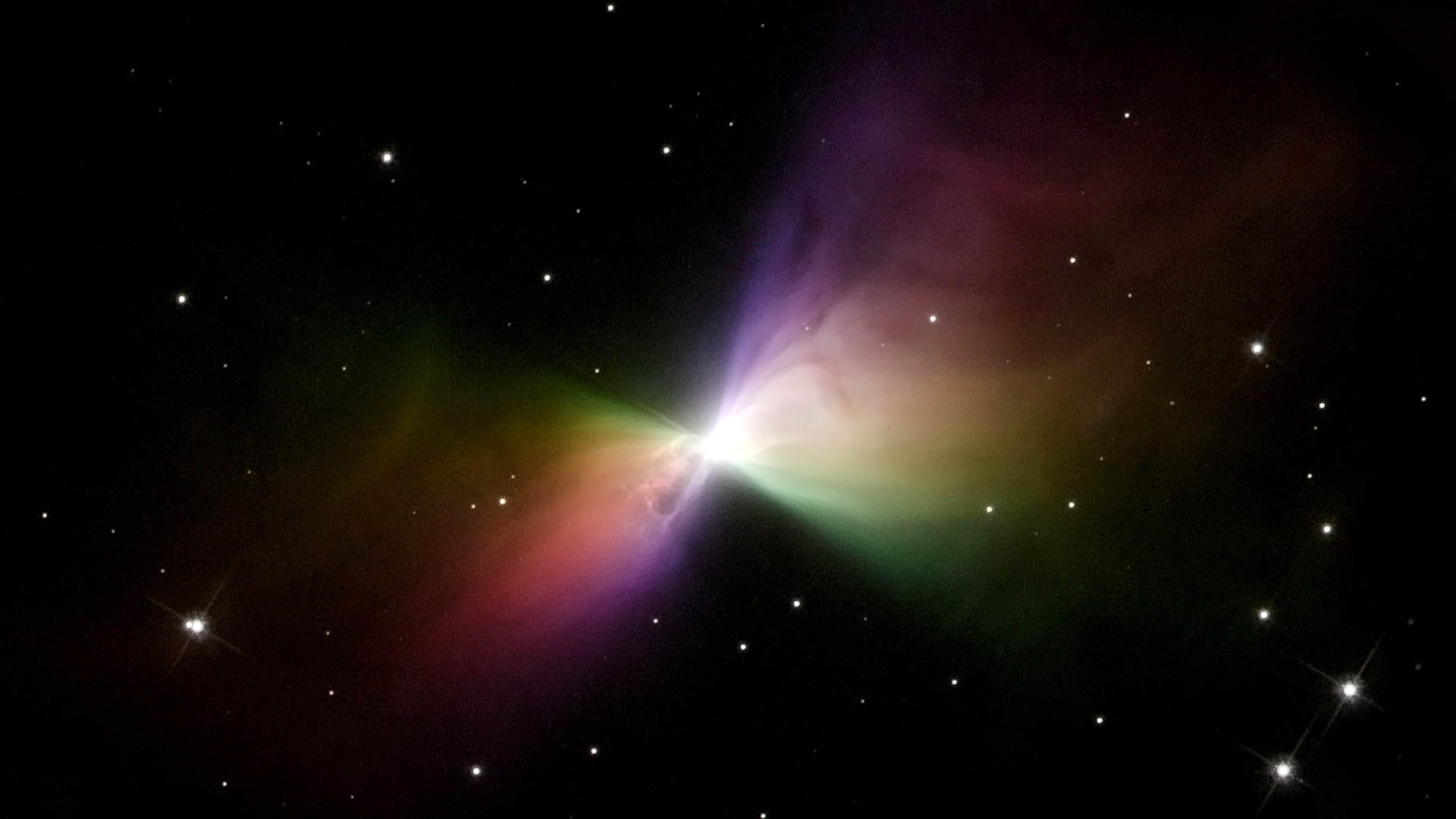
The coldest object in space


Impressive 🤩
ReplyDeleteGood job keep it up
Amazing 😍
ReplyDeleteAmazing 👍
ReplyDeletegreat job...
ReplyDeleteAmazing 🤩
ReplyDelete